A survival story: how a pop-up changed the trajectory
Back to Amira.
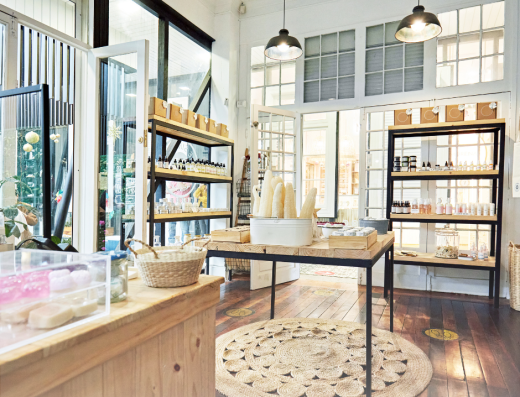
Instead of signing a long lease, she lines up a three-month pop-up in a small vacant unit just off the high street. The terms are simple:
- Short, clear licence agreement.
- All-in price she can map to actual weekly sales.
- Freedom to walk away or extend once the trial ends.
During those three months she:
- Tests multiple opening hours to see when her customers really show up.
- Experiments with different products – cinnamon buns sell out; one cake never does.
- Learns that weekday mornings are slow, but Saturdays and late afternoons are gold.
A few important things happen:
- She validates that there is real offline demand.
- She discovers that her ideal location is actually closer to the station, not the original street she had in mind.
- She proves to herself – and potential landlords – that she can generate consistent revenue.
By the end of the pop-up, she hasn’t “made it”. But she has three things she didn’t have before:
- Data – real numbers on what works.
- Confidence – grounded in experience, not just optimism.
- Options – including the option to do another short-term run in an even better spot.
The original long lease still exists. The difference is that, if she ever considers signing something longer, it will be as a founder who has already lived with her idea in the wild.
How to start using short-term space if you’re new to it
If you’re staring at a lease and feeling queasy, here’s a simpler starting point.
1. Define the minimum test
Ask yourself:
- “What’s the smallest, real-world test I can run to see if this idea has legs?”
- “How many weeks or months do I really need to learn something useful?”
You might not need a year. You might only need six Saturdays.
2. Decide what kind of space you actually need
Be honest about what matters:
- Do you need walk-in footfall, or just a place to pack orders?
- Do you need a full kitchen, or can you start with a stall?
- Do you need a private studio, or is shared space enough for now?
This will narrow down your search and keep costs aligned with reality, not ego.
3. Look specifically for short-term and flexible options
Instead of starting with “shops to let” and working backwards, start with:
- Pop-up markets and local events.
- Short-term listings for vacant units.
- Flexible studios and workspaces with rolling terms.
Platforms like Occupii exist to make this easier – collecting short-term and flexible commercial space options in one place so you’re not spending your evenings trawling random listings and sending hopeful emails.
4. Treat every short-term space as a live experiment
Go in with clear questions:
- What am I trying to learn from this period?
- What will I count as a success?
- What would make me decide to extend, move, or stop?
Then, at the end of the period, review honestly. The goal isn’t to prove you were right. It’s to get closer to the truth.
Where Occupii fits in this picture
Occupii was born out of the painful experience of seeing good businesses pushed out of spaces they could no longer justify under rigid leases.
At its core, Occupii is a marketplace for:
- Landlords who want to list vacant commercial units for short-term, flexible use.
- Founders, makers, and community builders who need temporary retail and workspace to test and grow.
Instead of closed-door negotiations and dense heads of terms, the aim is:
- Clear, upfront information.
- Fairer expectations on both sides.
- A path from short-term trial to longer-term commitment that doesn’t destroy you if it doesn’t work out.
It’s one piece of a wider shift: away from the idea that you have to sign everything away up front, and towards a model where you earn your way into bigger commitments as the evidence builds.
Rethinking what “having premises” really means
There will always be a place for long leases and permanent homes. Some ideas do grow into businesses that need that kind of commitment.
But if you’re at the stage where you’re still asking:
- “Will anyone actually come?”
- “Is this the right street, town, or city?”
- “Can I really afford this if things wobble?”
…then short-term space rental is not a consolation prize. It’s the smart, resilient move.
Instead of gambling on a future you haven’t lived yet, you get to learn your way there — one pop-up, one stall, one temporary workspace at a time.
Occupii exists because too many of us learned those lessons the hard way. If we can make it normal – not radical – for UK founders to test ideas in flexible, short-term spaces before they stake everything on a lease, that alone would be a quiet revolution.
You don’t have to sign your life away to see if your idea belongs on the high street. You just have to give it a chance to stand in the light for a while – and choose spaces that flex with you while you figure it out.